
Blog
CJC-1295 vs Ipamorelin: Understanding Two Popular Growth Hormone Research Peptides (2026 Guide)

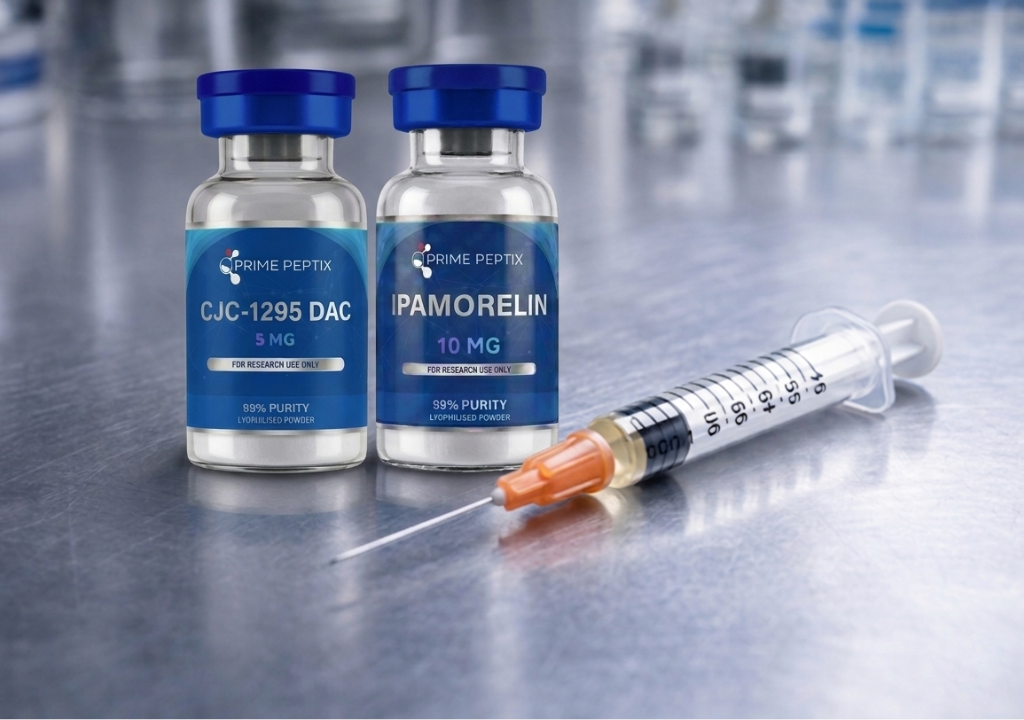
CJC-1295 vs Ipamorelin: Understanding Two Popular Research Peptides
CJC-1295 and Ipamorelin are among the most frequently discussed compounds within growth hormone peptide research. Both peptides continue attracting scientific interest because of their unique interactions with growth hormone-related pathways and their role in modern peptide signaling studies.
Researchers often compare these compounds due to their complementary mechanisms and their widespread use in laboratory investigations involving peptide-receptor interactions, signaling pathways, and advanced peptide engineering.
As peptide science continues evolving, CJC-1295 and Ipamorelin remain important subjects within research environments across Australia and internationally.
What Is CJC-1295?
CJC-1295 is a synthetic peptide commonly studied for its interaction with growth hormone-releasing hormone (GHRH) pathways.
Researchers investigating CJC-1295 often focus on:
- Peptide signaling mechanisms
- Growth hormone pathway research
- Receptor interaction studies
- Long-acting peptide design
- Stability characteristics
Its molecular structure and extended activity profile have contributed to its popularity in peptide research.
What Is Ipamorelin?
Ipamorelin is a synthetic peptide commonly investigated for its interaction with ghrelin receptor pathways.
Researchers study Ipamorelin because of its:
- Selective receptor activity
- Peptide signaling properties
- Laboratory research applications
- Molecular stability
- Compatibility with peptide studies
Ipamorelin has become one of the most recognized compounds in growth hormone-related peptide research.
Why Researchers Compare CJC-1295 and Ipamorelin
Although both compounds are associated with growth hormone pathway research, they function through different mechanisms.
Researchers frequently compare:
- Receptor interactions
- Signaling pathways
- Molecular structures
- Stability characteristics
- Laboratory applications
This comparison helps scientists better understand how different peptide compounds interact within complex biological systems.
CJC-1295 vs Ipamorelin: Key Research Differences
| Feature | CJC-1295 | Ipamorelin |
|---|---|---|
| Research Category | GHRH analogue | Ghrelin receptor agonist |
| Primary Research Focus | Growth hormone signaling pathways | Ghrelin receptor pathway studies |
| Peptide Structure | Modified peptide analogue | Selective peptide compound |
| Research Interest | High | High |
| Common Laboratory Form | Lyophilised powder | Lyophilised powder |
Both compounds remain important subjects within growth hormone-related peptide investigations.
Growth Hormone Research and Peptide Science
Modern peptide research increasingly focuses on understanding complex signaling systems and receptor interactions.
Researchers investigating growth hormone pathways commonly study:
- Signaling cascades
- Peptide-receptor interactions
- Molecular communication pathways
- Long-acting peptide compounds
- Advanced peptide engineering
CJC-1295 and Ipamorelin continue contributing to this growing field of scientific investigation.
Peptide Stability and Storage Considerations
Proper storage remains essential when handling research peptides.
Researchers commonly prioritize:
Temperature Control
Maintaining stable storage conditions may help preserve peptide integrity.
Moisture Protection
Minimizing moisture exposure can support peptide stability.
Controlled Laboratory Environments
Proper handling procedures may reduce contamination risks and support research consistency.
Reconstitution of CJC-1295 and Ipamorelin
Like many research compounds, CJC-1295 and Ipamorelin are commonly supplied as lyophilised powders.
Researchers generally focus on:
- Sterile laboratory techniques
- Controlled mixing procedures
- Accurate measurements
- Appropriate solvent selection
Following proper laboratory protocols helps maintain consistency during peptide research.
Why Lyophilised Peptides Are Commonly Used
Lyophilisation remains a widely used preservation method in peptide research.
Benefits of freeze-drying include:
- Reduced moisture exposure
- Improved storage stability
- Easier transportation
- Extended preservation under controlled conditions
Many laboratories prefer lyophilised peptides due to their flexibility and storage advantages.
Peptide Purity and Research Quality
High-quality research materials are essential for scientific investigations.
Researchers commonly evaluate:
- HPLC purity levels
- Analytical testing standards
- Batch consistency
- Manufacturing quality
Purity testing helps support reliable and reproducible research outcomes.
Growth Hormone Peptide Research in Australia
Interest in growth hormone-related peptide research continues expanding throughout Australia.
Researchers and laboratories increasingly seek access to:
- High-purity peptide compounds
- Research-grade materials
- Analytical peptide products
- Reliable peptide suppliers
PrimePeptix supports the Australian research community by supplying research compounds intended exclusively for scientific and laboratory use.
Frequently Asked Questions
What is the difference between CJC-1295 and Ipamorelin?
Researchers study CJC-1295 primarily as a GHRH analogue, while Ipamorelin is commonly investigated for its interaction with ghrelin receptor pathways.
Why are CJC-1295 and Ipamorelin often compared?
These compounds are frequently compared because both are involved in growth hormone-related research but operate through different receptor mechanisms.
Are CJC-1295 and Ipamorelin supplied as lyophilised peptides?
Yes. Many research-grade peptide compounds are supplied in lyophilised form to support stability and storage requirements.
Why is peptide purity important in research?
High-purity compounds help support consistency, reliability, and analytical accuracy in laboratory investigations.
How should research peptides be stored?
Researchers generally recommend controlled storage conditions that minimize exposure to moisture, excessive heat, and contamination risks.
Why is growth hormone peptide research important?
Growth hormone pathway research contributes to a broader understanding of peptide signaling systems and receptor interactions within biological research models.
Conclusion
CJC-1295 and Ipamorelin remain two of the most widely discussed compounds in growth hormone peptide research. Their distinct mechanisms, strong scientific interest, and relevance in peptide signaling investigations continue making them valuable subjects for laboratory study.
As peptide science advances, both compounds are expected to remain important areas of research within growth hormone pathway investigations and modern peptide engineering.