Blog
Peptide Mixing & Reconstitution Guide for Research Use

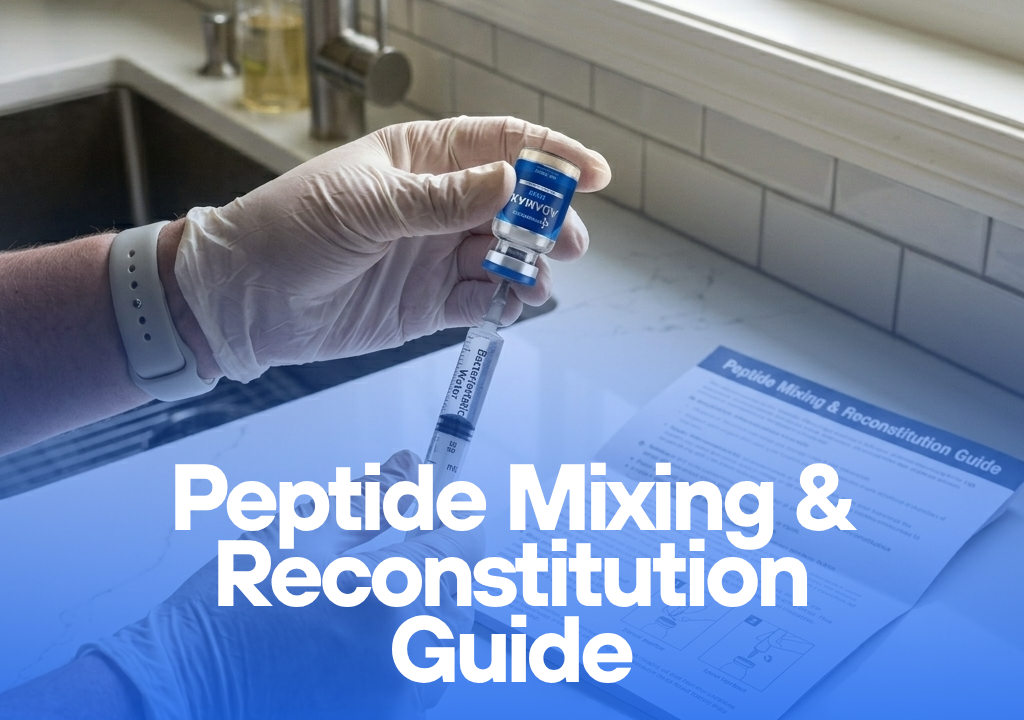
Understanding Peptide Dosing, Concentration & Preparation
PrimePeptix Research Library
Research peptides are commonly supplied as lyophilized (freeze-dried) powders, which means they require preparation before laboratory analysis. One of the most searched topics among beginner researchers is how peptide mixing and concentration calculations work.
Understanding peptide reconstitution is important because improper preparation may affect:
- Solution consistency
- Research accuracy
- Compound stability
- Experimental reproducibility
This guide explains peptide mixing in a simple, beginner-friendly format while covering the core principles used in laboratory research environments.
What Is Peptide Reconstitution?
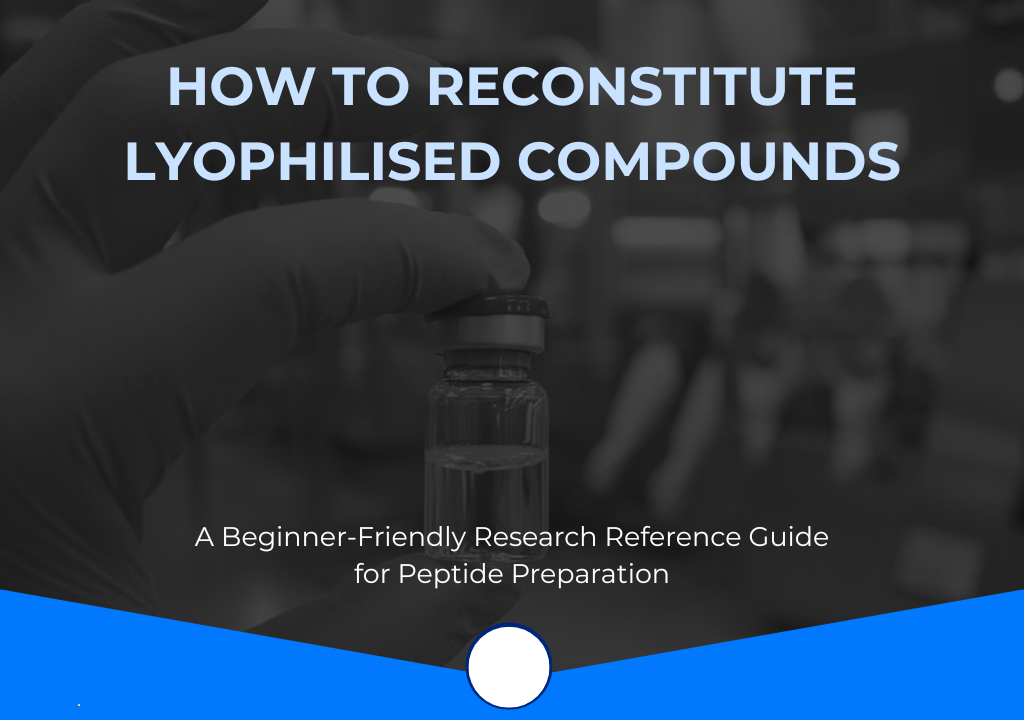
Peptide reconstitution is the process of adding a sterile liquid to a freeze-dried peptide powder to create a liquid solution for research handling.
Most peptides are supplied in dry form because freeze-drying helps maintain:
- Structural stability
- Transport safety
- Longer shelf life
- Reduced moisture degradation
Once liquid is added, the peptide becomes more sensitive to environmental conditions and typically requires refrigerated storage.
Why Peptides Are Supplied as Powder
Research peptides are highly sensitive biological compounds. Moisture and heat exposure can reduce stability over time.
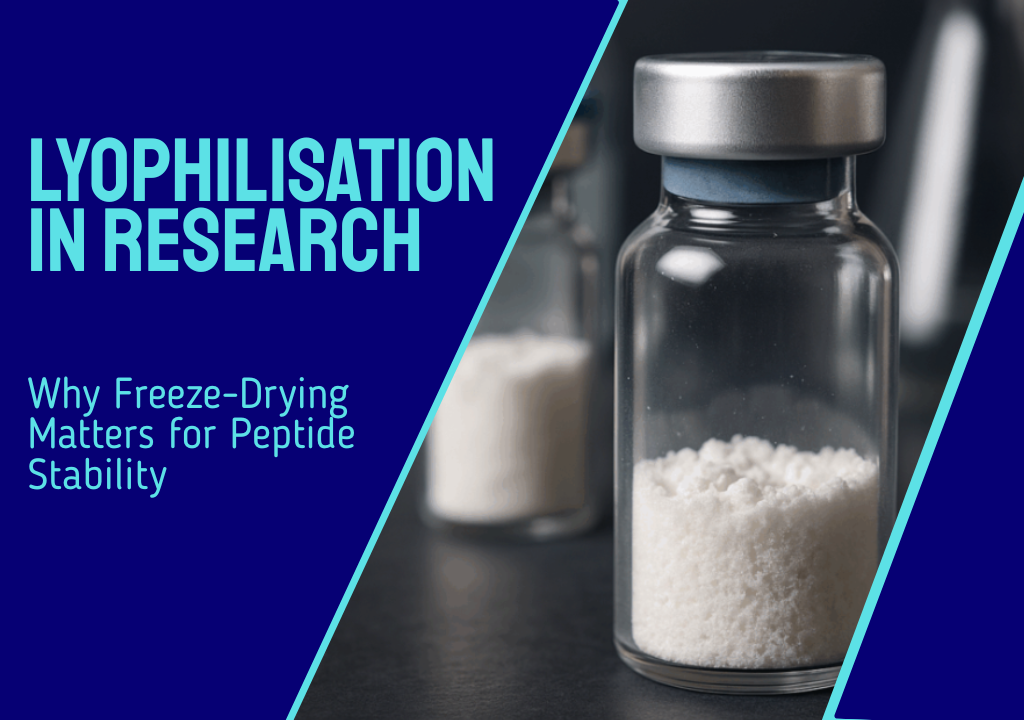
Lyophilization (freeze-drying) helps preserve peptide integrity by removing water content from the compound.
Benefits of lyophilized peptides include:
- Better long-term stability
- Easier shipping and storage
- Reduced degradation risk
- Improved handling consistency
This is why most premium research peptides arrive as white or off-white powder inside sealed vials.
What Is Bacteriostatic Water?
Bacteriostatic Water, often called BAC Water, is a sterile diluent commonly used in peptide research.
It contains:
- Sterile water
- 0.9% benzyl alcohol preservative
The preservative helps reduce bacterial growth inside multi-use vials, making BAC Water a common choice for peptide reconstitution procedures.
Understanding mg vs ml
One of the biggest beginner mistakes is confusing:
- mg (milligrams)
- ml (millilitres)
These measurements are completely different.
What Does mg Mean?
Milligrams (mg) represent the amount of peptide inside the vial.
Example:
- A vial labelled 10mg contains 10 milligrams of peptide powder.
What Does ml Mean?
Millilitres (ml) refer to the amount of liquid added during reconstitution.
Example:
- Adding 2ml of bacteriostatic water changes the concentration of the solution.
How Peptide Concentration Works
The concentration of a peptide solution depends on:
- Amount of peptide powder
- Amount of liquid added
Example:
A researcher has:
- 10mg peptide vial
- Adds 2ml bacteriostatic water
The concentration becomes:
2ml10mg=5mg/ml
This means:
- Every 1ml contains 5mg of peptide.
Simple Peptide Mixing Examples
| Peptide Amount | Water Added | Final Concentration |
|---|---|---|
| 5mg | 1ml | 5mg/ml |
| 10mg | 2ml | 5mg/ml |
| 15mg | 3ml | 5mg/ml |
Researchers may choose different liquid volumes depending on:
- Laboratory protocols
- Preferred concentration strength
- Analytical measurement requirements
Step-by-Step Peptide Mixing Process
Although protocols vary between laboratories, peptide preparation commonly follows these basic steps.
1. Prepare a Sterile Workspace
Researchers generally clean the workspace and use sterile handling techniques before opening vials.
2. Sanitize the Vial Tops
Alcohol swabs are commonly used to clean vial tops before handling.
3. Draw the Diluent
The required amount of bacteriostatic water or sterile liquid is drawn into a syringe.
4. Add Liquid Slowly
Researchers usually inject the liquid gently against the inside wall of the vial instead of directly onto the powder.
This helps reduce unnecessary agitation.
5. Allow the Peptide to Dissolve
Most peptides dissolve naturally within a short period. Vigorous shaking is generally avoided because some peptides are sensitive to excessive agitation.
6. Store Under Refrigeration
After reconstitution, peptides are commonly stored between 2–8°C to support stability.
Common Peptide Mixing Mistakes
Many beginner handling issues involve improper preparation or storage.
Common mistakes include:
- Confusing mg and ml
- Adding incorrect liquid amounts
- Shaking peptide vials aggressively
- Using non-sterile diluents
- Leaving reconstituted peptides at room temperature
- Frequent freeze-thaw cycles
Proper handling helps maintain research consistency and peptide integrity.
Why Peptide Stability Matters
Research peptides are delicate compounds. Improper storage or preparation may impact:
- Molecular stability
- Solution consistency
- Experimental repeatability
- Research accuracy
This is why reputable peptide suppliers focus heavily on:
- Purity testing
- Sterile handling
- Proper packaging
- Controlled storage procedures
At PrimePeptix, all research compounds are handled using strict laboratory-focused quality standards to support reliable research applications.
Best Storage Practices for Reconstituted Peptides
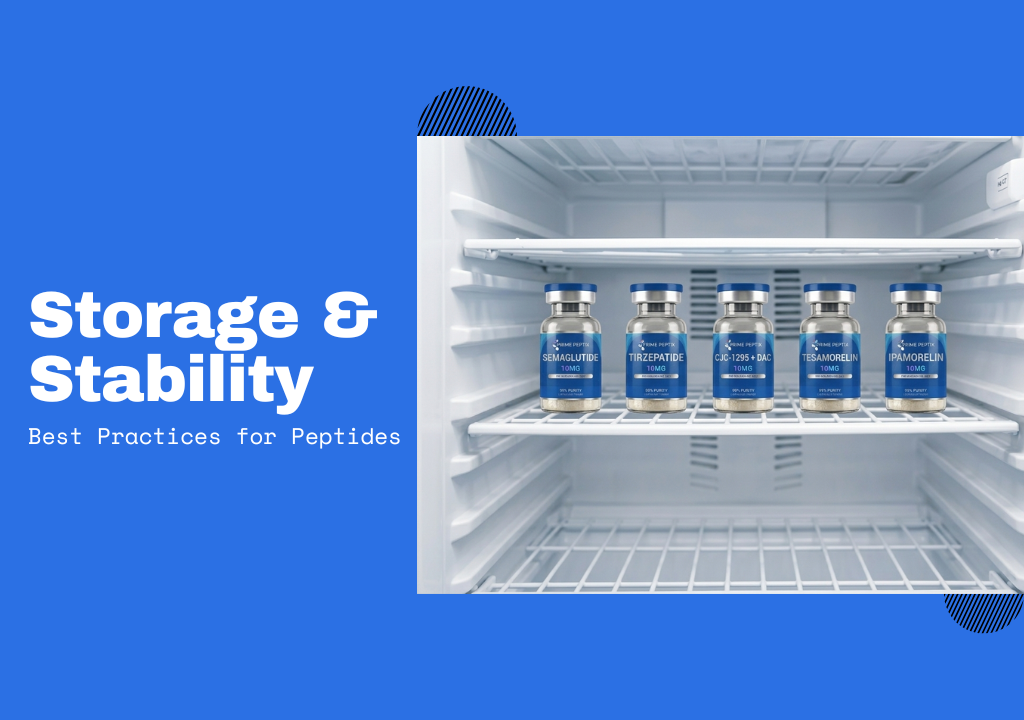
After mixing, peptides are generally stored:
- Refrigerated at 2–8°C
- Away from sunlight
- Upright when possible
- Protected from repeated temperature changes
Proper storage helps support longer-term peptide stability in laboratory settings. Even lyophilised compounds require proper storage practices to maintain molecular integrity during research use.
Why Purity Verification Is Important
Research-grade peptides are commonly verified using analytical testing methods such as:
- HPLC (High-Performance Liquid Chromatography)
- Mass spectrometry
Purity verification helps researchers confirm:
- Compound identity
- Batch consistency
- Research reliability
Higher-quality sourcing often contributes to more consistent laboratory results.
Final Thoughts
Understanding peptide reconstitution and concentration calculations is essential for anyone working with research peptides. While peptide mixing may initially seem confusing, the process becomes much easier once researchers understand the relationship between:
- Peptide amount (mg)
- Liquid volume (ml)
- Final concentration
Proper preparation, sterile handling, and refrigerated storage all play an important role in maintaining peptide stability and research consistency.
As peptide research continues expanding across longevity, recovery, metabolic, and endocrine science, educational resources remain essential for supporting accurate laboratory workflows.
FAQs
What is peptide reconstitution?
Peptide reconstitution is the process of adding sterile liquid to freeze-dried peptide powder to create a research solution.
Why are peptides mixed with bacteriostatic water?
Bacteriostatic water contains a preservative that helps reduce bacterial growth during laboratory handling.
What does 10mg peptide mean?
A 10mg peptide vial contains 10 milligrams of peptide compound before reconstitution.
Why are peptides stored in powder form?
Freeze-dried powder helps improve peptide stability and extends shelf life during storage and transportation.
Should reconstituted peptides be refrigerated?
Yes. Most reconstituted peptides are commonly stored under refrigeration to help maintain stability.
Why should peptide vials not be shaken aggressively?
Excessive agitation may affect the structural stability of certain peptides during preparation.
Research Disclaimer
All products supplied by PrimePeptix are intended strictly for laboratory research and analytical purposes only. They are not intended for human consumption, therapeutic use, medical application, or veterinary use.