Blog
Bacteriostatic Water vs Sterile Water

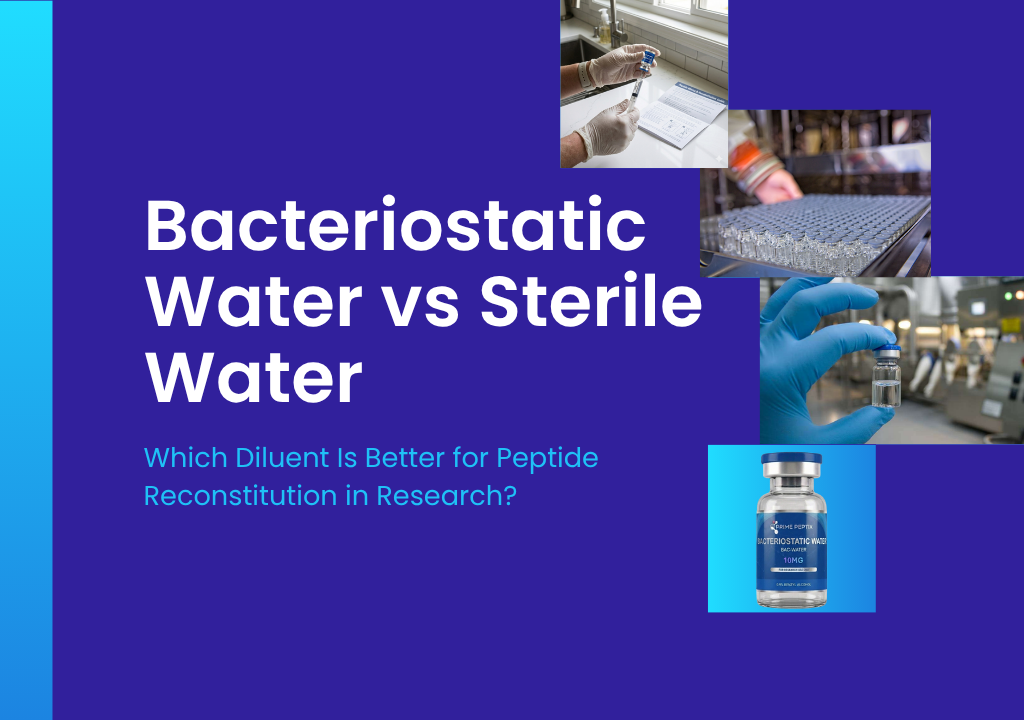
Which Diluent Is Better for Peptide Reconstitution in Research?
PrimePeptix Research Library
One of the most common questions in peptide research is:
What is the difference between Bacteriostatic Water and Sterile Water?
Both are widely used in laboratory environments for reconstituting lyophilised compounds, preparing analytical solutions, and supporting peptide handling workflows. However, despite appearing similar, they serve different purposes depending on the type of research protocol being performed.
Choosing the correct diluent may influence:
- Solution stability
- Contamination control
- Repeated vial access
- Experimental consistency
This guide explains the differences between Bacteriostatic Water (BAC Water) and Sterile Water, how each is commonly used in peptide research, and why laboratories may choose one over the other depending on the application.
What Is Bacteriostatic Water?
Bacteriostatic Water, often called:
BAC Water
is sterile water containing:
0.9% benzyl alcohol
The benzyl alcohol acts as a bacteriostatic preservative, meaning it helps inhibit bacterial growth after the vial has been punctured multiple times.
Because of this preservative, BAC Water is commonly used in peptide research involving:
- Multi-use vials
- Repeated withdrawals
- Extended laboratory workflows
- Reconstituted peptide storage over several days or weeks
Many peptide handling guides consider BAC Water the standard diluent for general peptide reconstitution procedures.
What Is Sterile Water?
Sterile Water is purified sterile water without preservatives.
Unlike BAC Water, it contains:
- No benzyl alcohol
- No antimicrobial additives
- No bacteriostatic protection
Because it is preservative-free, Sterile Water is generally intended for:
- Single-use applications
- Immediate preparation
- Sensitive laboratory assays
- Experiments requiring additive-free solvents
Once opened, Sterile Water has limited protection against microbial contamination.
Main Difference Between BAC Water & Sterile Water
The biggest difference is simple:
| Feature | Bacteriostatic Water | Sterile Water |
|---|---|---|
| Contains preservative | Yes | No |
| Benzyl alcohol | 0.9% | None |
| Multi-use support | Yes | No |
| Common peptide use | Very common | Situational |
| Typical usage | Repeated withdrawals | Single-use preparation |
The preservative inside BAC Water helps reduce bacterial growth after repeated vial access. Sterile Water does not provide this protection.
Why Researchers Commonly Use BAC Water for Peptides
Most peptide research involves:
- Multiple withdrawals from the same vial
- Storage after reconstitution
- Ongoing analytical workflows
Because BAC Water contains benzyl alcohol, many laboratories prefer it for:
- Improved handling flexibility
- Reduced contamination risk
- Better multi-use practicality
Research references commonly note that BAC Water may remain suitable for multi-dose handling for several weeks under proper refrigerated conditions.
When Sterile Water May Be Preferred
Although BAC Water is common in peptide workflows, Sterile Water still plays an important role in laboratory research.
Researchers may prefer Sterile Water when:
- Preservatives may interfere with assays
- Sensitive enzymatic reactions are involved
- A completely additive-free solvent is required
- Only a single-use preparation is needed
Some peptide compounds may also have compatibility considerations involving benzyl alcohol.
How BAC Water Helps Reduce Contamination Risk
Every time a vial is punctured:
- Air exposure increases
- Contamination risk rises
- Bacterial introduction becomes possible
The benzyl alcohol inside BAC Water helps inhibit bacterial growth after repeated punctures.
This is one reason BAC Water is commonly associated with:
- Multi-dose peptide handling
- Extended reconstitution workflows
- Research storage flexibility
Does BAC Water Improve Peptide Stability?
BAC Water itself does not directly improve peptide purity or potency.
However, by helping reduce bacterial contamination risk during repeated vial access, it may support:
- Cleaner handling conditions
- More stable multi-use workflows
- Reduced contamination-related degradation risks
Proper refrigeration and sterile handling remain essential regardless of the diluent used.
Storage Differences After Opening
Bacteriostatic Water
Because it contains a preservative, BAC Water is commonly used over longer laboratory workflows after opening. Many research references commonly cite approximately:
28 days after first puncture under proper conditions.
Sterile Water
Sterile Water lacks antimicrobial protection and is commonly treated as:
Single-use after opening.
Some laboratory references suggest using opened Sterile Water immediately to minimise contamination risk.
Common Mistakes Researchers Make
Many beginner peptide handling issues involve misunderstanding diluents.
Common mistakes include:
- Using non-sterile water
- Assuming BAC Water and Sterile Water are identical
- Reusing opened Sterile Water repeatedly
- Improper peptide refrigeration after reconstitution
- Failing to maintain sterile handling procedures
Research discussions online frequently identify diluent confusion as one of the most common beginner peptide handling problems.
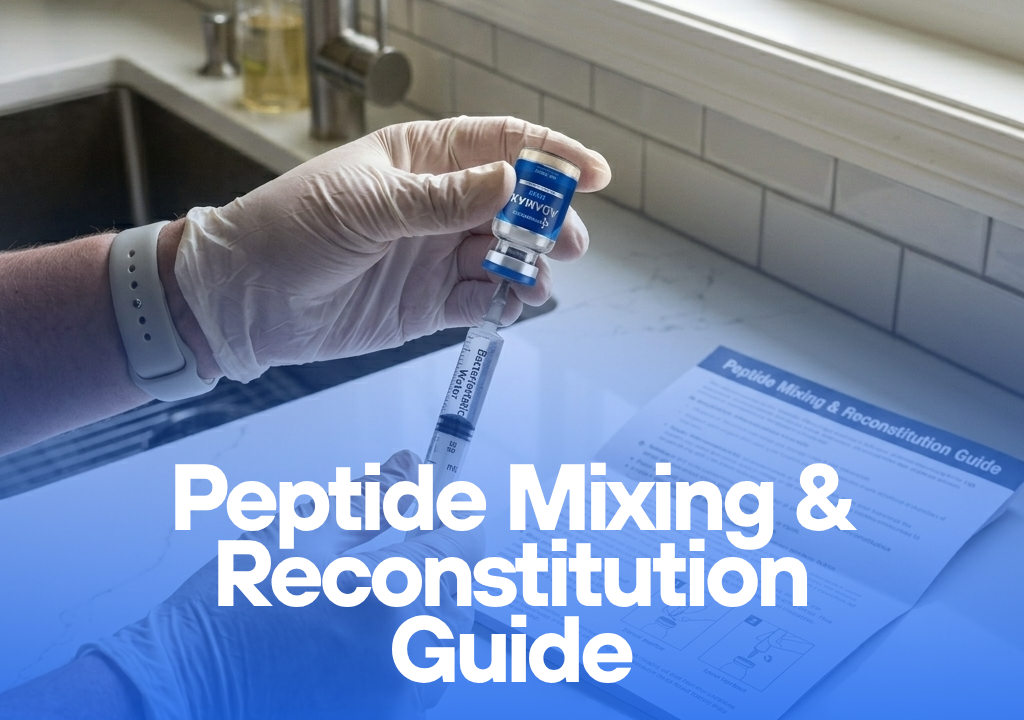
Best Practices for Peptide Reconstitution
Researchers commonly follow these handling practices:
- Sanitize vial tops with alcohol swabs
- Use sterile syringes
- Inject liquid slowly
- Refrigerate peptides after reconstitution
- Avoid repeated freeze-thaw cycles
Proper laboratory handling helps support peptide stability and research consistency.
Which Option Is Better?
There is no universal “best” option.
BAC Water is commonly preferred when:
✔ Multiple withdrawals are required
✔ Peptides will be stored after mixing
✔ Extended workflows are involved
Sterile Water may be preferred when:
✔ Additive-free conditions are required
✔ Single-use preparation is planned
✔ Sensitive assays may react to preservatives
The correct choice depends on:
- Laboratory protocol
- Peptide chemistry
- Experimental design
- Storage requirements
Why High-Quality Handling Standards Matter
Regardless of the diluent used, peptide stability also depends on:
- Sterile handling
- Proper storage temperatures
- Moisture protection
- Quality manufacturing standards
At PrimePeptix, all research compounds are handled using strict laboratory-focused quality procedures designed to support:
- Reliable peptide integrity
- Stable storage workflows
- Research-grade consistency
Final Thoughts
Bacteriostatic Water and Sterile Water are both widely used in peptide and biochemical research, but they serve different purposes.
The main difference comes down to:
Preservative vs no preservative.
BAC Water contains benzyl alcohol that helps inhibit bacterial growth during repeated use, while Sterile Water provides a pure additive-free solvent for single-use or sensitive applications.
Understanding these differences helps researchers make better decisions regarding:
- Peptide reconstitution
- Laboratory workflows
- Storage procedures
- Stability management
As peptide research continues expanding across longevity, metabolic, endocrine, and recovery science, proper diluent selection remains an important part of maintaining reliable laboratory practices.
FAQs
What is Bacteriostatic Water?
Bacteriostatic Water is sterile water containing 0.9% benzyl alcohol to help inhibit bacterial growth.
What is Sterile Water?
Sterile Water is preservative-free purified water commonly used for single-use laboratory applications.
Why is BAC Water commonly used for peptides?
BAC Water is commonly used because it supports repeated vial access and helps reduce contamination risk.
Does Sterile Water contain preservatives?
No. Sterile Water does not contain benzyl alcohol or antimicrobial preservatives.
Can peptides be reconstituted with Sterile Water?
Yes. Some laboratories use Sterile Water for single-use or additive-sensitive research applications.
Which lasts longer after opening?
BAC Water generally supports longer multi-use handling because of its preservative content.
Research Disclaimer
All products supplied by PrimePeptix are intended strictly for laboratory research and analytical purposes only. They are not intended for human consumption, therapeutic use, medical application, or veterinary use.