Blog
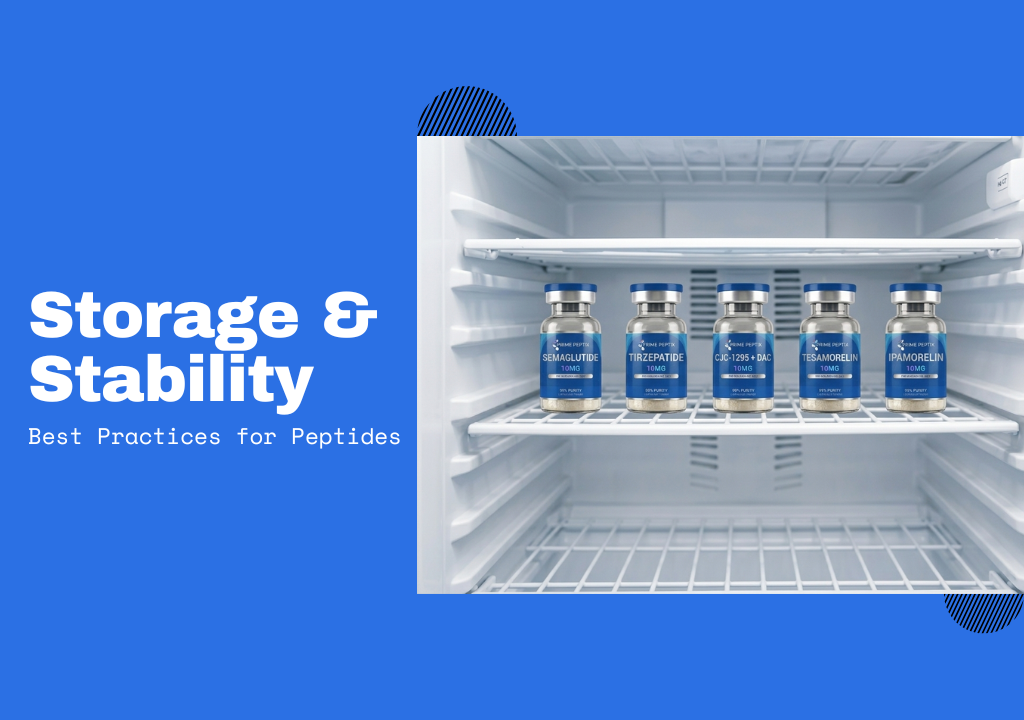
Storage & Stability: Best Practices for Peptides

Research Reference Guide for Lyophilized & Reconstituted Peptides
PrimePeptix Research Library
Proper peptide storage is one of the most important factors in maintaining compound stability during laboratory research. Even high-purity peptides may lose integrity if exposed to excessive heat, moisture, light, or repeated temperature changes.
Because peptides are biologically sensitive molecules, laboratories commonly follow strict storage protocols to help preserve:
- Molecular stability
- Structural integrity
- Research consistency
- Analytical reliability
This guide explains the best practices commonly used for storing both lyophilized (freeze-dried) and reconstituted (liquid) peptides in research environments.
Why Peptide Storage Matters
Peptides can degrade over time when exposed to environmental stress. The most common causes of degradation include:
- Heat exposure
- Moisture contamination
- UV light
- Oxidation
- Freeze-thaw cycles
- Bacterial contamination after reconstitution
Improper storage may affect peptide stability and reduce consistency in laboratory analysis. Research guides commonly identify moisture and temperature fluctuations as two of the biggest factors influencing peptide degradation.
What Is a Lyophilized Peptide?
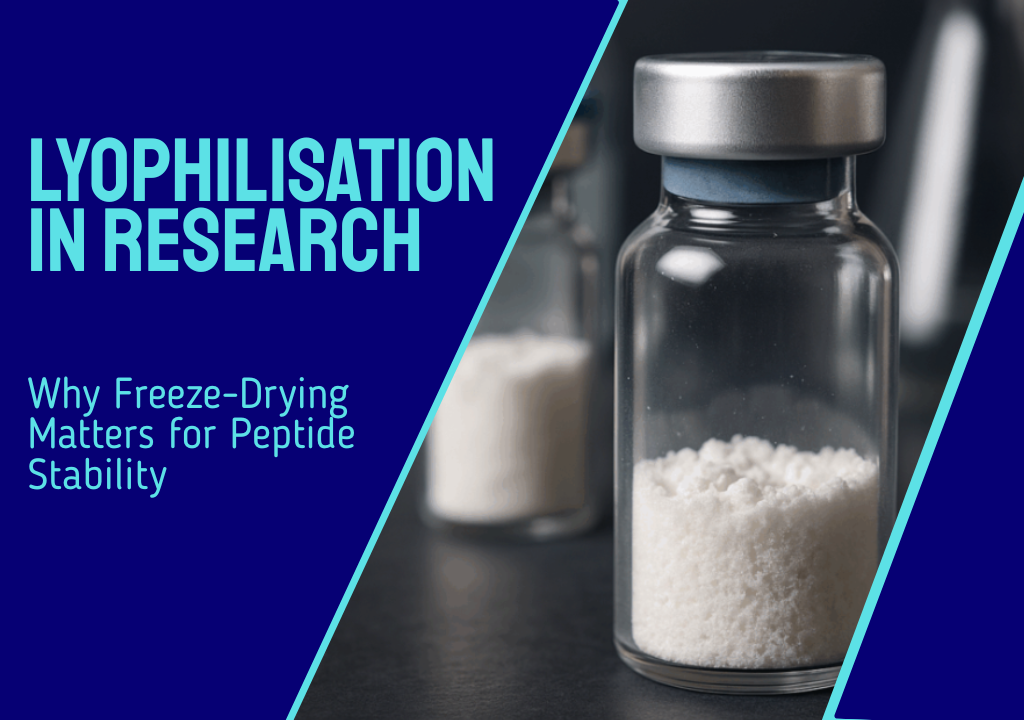
Most research peptides are supplied in lyophilized (freeze-dried) powder form because this is the most stable state for long-term storage.
Lyophilization removes water from the peptide using a freeze-drying process. Without moisture present, many degradation pathways slow significantly.
Benefits of lyophilized peptides include:
- Longer shelf life
- Better transport stability
- Reduced hydrolysis risk
- Improved storage consistency
This is why most research-grade peptides are shipped as dry powder instead of liquid solutions.
Best Storage Conditions for Lyophilized Peptides
Lyophilized peptides are generally considered highly stable when stored correctly.
Recommended Storage Temperatures
| Storage Condition | Typical Stability Range |
|---|---|
| Room Temperature | Days to weeks |
| Refrigerated (2–8°C) | Months |
| Freezer (-20°C) | 1–5 years |
| Ultra-Low Freezer (-80°C) | Multi-year archival storage |
Research references commonly recommend -20°C storage for long-term peptide preservation.
Protecting Peptides from Moisture
Moisture is one of the biggest threats to peptide stability.
Lyophilized peptides are hygroscopic, meaning they can absorb water from the surrounding air. Even small amounts of condensation may begin degradation processes.
Best practices include:
- Keeping vials tightly sealed
- Using desiccant packs
- Avoiding humid environments
- Minimising unnecessary vial opening
Researchers commonly allow frozen peptide vials to reach room temperature before opening to reduce condensation risk.
Why Light Exposure Can Affect Peptides
Many peptides are sensitive to UV light and prolonged light exposure.
Light may contribute to:
- Oxidation
- Photo-degradation
- Reduced structural stability
Research storage guides commonly recommend:
- Storing peptides in dark environments
- Using opaque containers
- Keeping vials away from direct sunlight
Storage After Reconstitution
Once a peptide is mixed into solution, stability changes significantly.
Reconstituted peptides become more sensitive because water reactivates chemical degradation pathways previously slowed by freeze-drying.
Best Practices for Reconstituted Peptides
Most research references recommend:
- Refrigeration at 2–8°C
- Keeping vials upright
- Avoiding repeated warming and cooling
- Minimising contamination during handling
Many peptide storage guides suggest reconstituted peptides remain most stable when refrigerated and used within several weeks depending on peptide type and solvent conditions.
Should Reconstituted Peptides Be Frozen?
This remains one of the most debated topics in peptide handling discussions.
Some research references suggest freezing may increase degradation risk because ice crystal formation can stress peptide structures.
Other laboratory discussions suggest aliquoting into smaller portions may reduce repeated freeze-thaw damage if freezing is necessary.
For general laboratory handling, refrigeration is commonly considered the standard approach after reconstitution.
Understanding Freeze-Thaw Cycles
Repeated freezing and thawing may negatively affect peptide stability over time.
Potential issues include:
- Structural aggregation
- Oxidation
- Concentration changes
- Reduced analytical consistency
Many research laboratories minimise freeze-thaw exposure by:
- Storing smaller aliquots
- Keeping working stock separate
- Avoiding repeated warming cycles
Signs a Peptide May Be Degrading
Researchers commonly monitor for:
- Unusual colour changes
- Cloudiness after reconstitution
- Visible particles
- Excessive clumping
- Unexpected solution appearance
While appearance alone does not always confirm degradation, major visual changes may indicate handling or stability issues.
Best Practices for Long-Term Peptide Stability
Recommended Storage Checklist
Lyophilized Peptides
✔ Store dry
✔ Keep sealed
✔ Protect from moisture
✔ Refrigerate or freeze
✔ Avoid direct light
Reconstituted Peptides
✔ Refrigerate at 2–8°C
✔ Use sterile handling procedures
✔ Avoid repeated freeze-thaw cycles
✔ Limit room temperature exposure
✔ Keep tightly sealed
Why Purity & Handling Standards Matter
High-quality peptide manufacturing and storage procedures help support:
- Batch consistency
- Analytical reproducibility
- Reliable laboratory workflows
Research-grade suppliers commonly use:
- HPLC purity verification
- Controlled packaging procedures
- Temperature-conscious shipping
- Sterile handling standards
At PrimePeptix, all compounds are handled under strict research-focused quality standards designed to support peptide stability and laboratory consistency.
Final Thoughts
Peptide stability depends heavily on proper storage and handling practices. Whether peptides are stored in lyophilized powder form or as reconstituted solutions, environmental exposure can significantly influence long-term integrity.
For most research environments, the key principles remain simple:
- Keep peptides cold
- Keep peptides dry
- Protect from light
- Avoid contamination
- Minimise freeze-thaw cycles
As peptide research continues growing across longevity, recovery, metabolic, and endocrine science, understanding proper storage procedures remains essential for maintaining reliable laboratory results.
FAQs
Why are peptides stored as powder?
Lyophilized powder improves peptide stability by removing moisture that may accelerate degradation.
What temperature should peptides be stored at?
Lyophilized peptides are commonly stored refrigerated or frozen, while reconstituted peptides are typically refrigerated at 2–8°C.
Can peptides degrade at room temperature?
Yes. Heat and moisture exposure may reduce peptide stability over time.
Why should peptide vials stay sealed?
Keeping vials sealed helps reduce moisture exposure and contamination risk.
What damages peptides most?
Common causes of degradation include heat, moisture, UV light, oxidation, and repeated freeze-thaw cycles.
Should reconstituted peptides be frozen?
Many research references recommend refrigeration instead of repeated freezing and thawing after reconstitution.
Research Disclaimer
All products supplied by PrimePeptix are intended strictly for laboratory research and analytical purposes only. They are not intended for human consumption, therapeutic use, medical application, or veterinary use.