Blog
Safe Handling & Lab PPE for Peptides

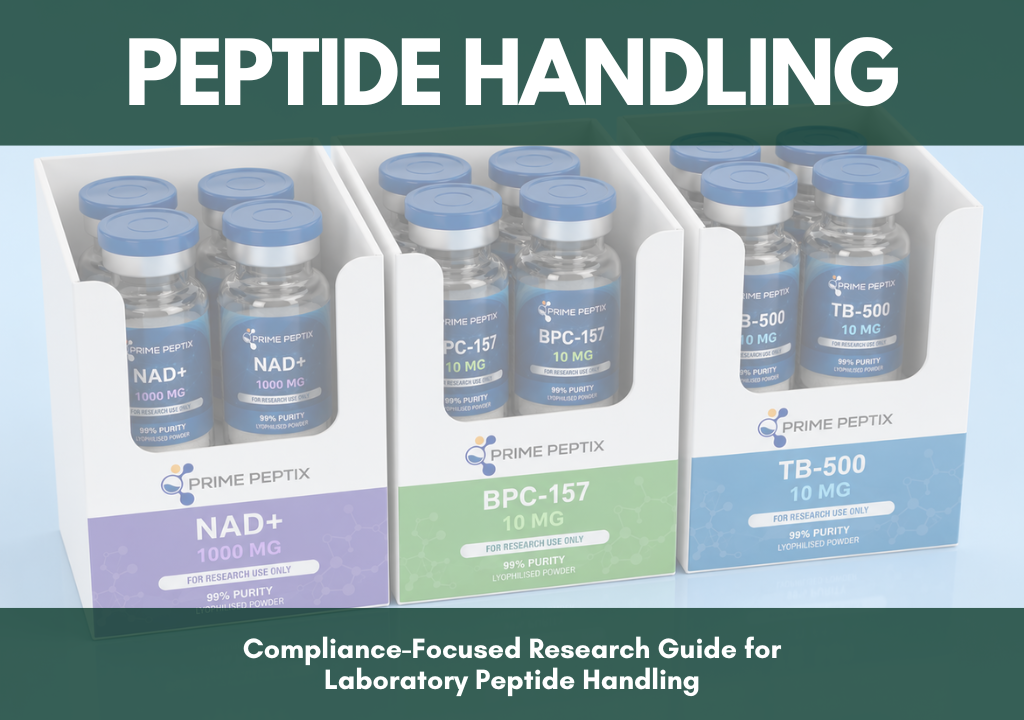
Compliance-Focused Research Guide for Laboratory Peptide Handling
PrimePeptix Research Library
As peptide research continues expanding across metabolic, endocrine, longevity, and biochemical sciences, proper laboratory handling standards have become increasingly important for maintaining:
- Research consistency
- Sample integrity
- Workplace safety
- Contamination control
Even highly purified peptides may become compromised if exposed to poor handling conditions, environmental contamination, or improper storage procedures.
For this reason, laboratories commonly implement:
- PPE (Personal Protective Equipment) protocols
- Sterile handling procedures
- Controlled preparation environments
- Sample management standards
This guide explains the basic safety principles commonly associated with peptide handling in laboratory research environments and outlines why compliance-focused workflows remain important for analytical consistency.
Why Safe Peptide Handling Matters
Research peptides are biologically active compounds that are often handled in highly controlled environments.
Improper handling may increase the risk of:
- Sample contamination
- Cross-contamination between compounds
- Solution instability
- Analytical inconsistencies
- Environmental exposure
While peptide research procedures vary depending on laboratory type and research design, most professional environments follow strict handling protocols to support cleaner and more reproducible workflows.
What Is PPE in Laboratory Research?
PPE stands for:
Personal Protective Equipment
PPE refers to the protective clothing and equipment researchers commonly use while handling laboratory compounds.
The purpose of PPE is to help reduce:
- Direct contact exposure
- Cross-contamination
- Environmental contamination
- Accidental sample compromise
In peptide laboratories, PPE protocols are often considered part of standard sterile handling practice.
Common PPE Used During Peptide Handling
The level of PPE used may vary depending on:
- Research environment
- Compound sensitivity
- Institutional safety policies
- Laboratory classification
However, common peptide handling PPE may include:
| PPE Item | Purpose |
|---|---|
| Disposable Gloves | Reduce direct contact & contamination |
| Laboratory Coat | Protect clothing & workspace |
| Safety Glasses | Eye protection during handling |
| Face Mask | Reduce airborne contamination |
| Hair Coverings | Support sterile workflows |
| Sterile Sleeves | Additional contamination control |
Many peptide preparation workflows use nitrile gloves because they provide good chemical resistance and help minimise contamination transfer.
Why Sterile Handling Is Important
Peptides are highly sensitive biological compounds.
Exposure to:
- Moisture
- Skin oils
- Dust particles
- Airborne contaminants
- Improper tools
may affect:
- Stability
- Purity
- Solution integrity
- Laboratory reproducibility
This is especially important during:
- Reconstitution
- Sample transfer
- Aliquoting
- Long-term storage preparation
Research laboratory protocols commonly emphasise sterile technique during peptide preparation workflows.
Preparing a Safe Peptide Work Area
Researchers commonly prepare peptide workspaces by:
- Cleaning surfaces thoroughly
- Removing unnecessary clutter
- Using disinfectants or alcohol wipes
- Organising sterile tools before opening vials
Controlled work environments help minimise contamination risks during peptide handling.
Some advanced laboratories may also use:
- Laminar flow hoods
- Clean benches
- HEPA filtration systems
for higher-level contamination control.
Safe Handling During Reconstitution
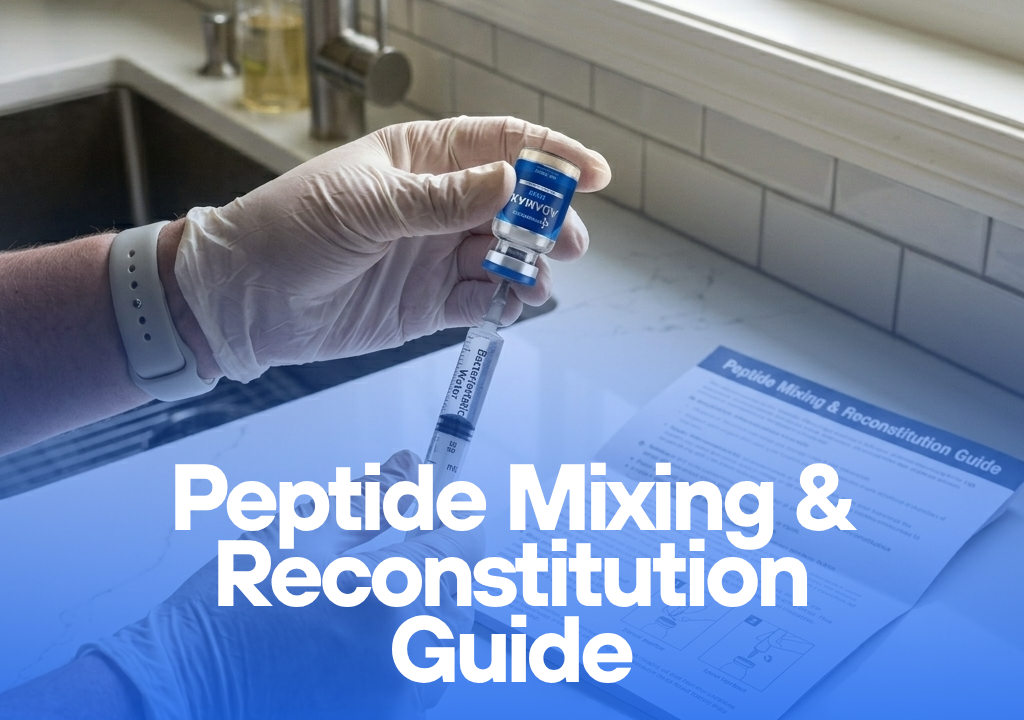
Peptide reconstitution is one of the most contamination-sensitive stages of laboratory handling.
Most peptide preparation guides recommend:
- Sanitizing vial tops with alcohol swabs
- Using sterile syringes
- Avoiding direct contact with needles or vial openings
- Injecting diluent slowly against the vial wall
- Minimising unnecessary vial exposure time
Proper reconstitution technique helps support:
- Cleaner solutions
- Reduced bacterial contamination
- Better peptide stability
Avoiding Cross-Contamination
Cross-contamination occurs when:
- Equipment is reused improperly
- Multiple peptides are handled carelessly
- Workspace hygiene is poor
This may lead to:
- Inaccurate research outcomes
- Mixed compounds
- Analytical inconsistencies
Laboratories commonly reduce contamination risks by:
- Using fresh syringes
- Labeling all samples clearly
- Separating workspaces for different compounds
- Disposing of used consumables properly
Why Temperature & Storage Matter
Even after proper handling, peptides may degrade if stored incorrectly.
Common stability risks include:
- Heat exposure
- UV light
- Moisture
- Repeated freeze-thaw cycles
Most peptide research references recommend:
- Refrigeration after reconstitution
- Moisture protection
- Light-resistant storage
- Proper vial sealing
Storage procedures are considered an important part of overall laboratory handling compliance.
Understanding Laboratory Compliance Standards
Professional laboratories commonly follow internal compliance protocols related to:
- Documentation
- Labeling
- Sterile handling
- Waste disposal
- Sample traceability
Although procedures vary between institutions, compliance-focused workflows help support:
- Research consistency
- Safer handling practices
- Organised laboratory operations
Good documentation practices are especially important in peptide research environments where multiple compounds may be handled simultaneously.
Common Mistakes During Peptide Handling
Many beginner handling problems result from poor laboratory discipline rather than peptide quality itself.
Common mistakes include:
- Handling peptides without gloves
- Reusing syringes
- Touching sterile vial tops
- Leaving peptides exposed to room air too long
- Failing to refrigerate reconstituted peptides
- Improper labeling of compounds
Research discussions frequently identify contamination and improper storage as major causes of peptide instability.
Why Researchers Use Single-Use Consumables
Many laboratories prefer:
- Single-use syringes
- Sterile needles
- Disposable gloves
- Fresh alcohol swabs
because they help reduce contamination risk and support cleaner workflows.
Using fresh sterile tools is considered a core principle of good laboratory handling practice.
Peptide Disposal & Waste Management
Laboratory waste procedures vary depending on:
- Institution
- Region
- Research classification
However, professional laboratories generally follow procedures for:
- Sharps disposal
- Biological waste separation
- Chemical waste handling
- Sterile consumable disposal
Proper disposal supports both workplace safety and compliance-focused laboratory management.
Why Quality Suppliers Matter
Even strong laboratory procedures cannot fully compensate for poor-quality compounds.
Researchers commonly look for suppliers offering:
- HPLC purity verification
- Secure packaging
- Controlled handling standards
- Research-grade manufacturing consistency
At PrimePeptix, all research compounds are handled under strict quality-focused procedures designed to support:
- Reliable storage integrity
- Laboratory-grade handling consistency
- Research-focused quality standards
Final Thoughts
Safe peptide handling is about much more than basic cleanliness. Proper PPE usage, sterile workflows, contamination control, and organised laboratory procedures all contribute to:
- Better research consistency
- Improved sample integrity
- More reliable analytical outcomes
As peptide research continues growing across longevity, endocrine, metabolic, and recovery sciences, compliance-focused laboratory handling remains an essential part of maintaining professional research standards.
The key principles remain straightforward:
- Work clean
- Handle sterilely
- Store correctly
- Label carefully
- Minimise contamination risk
These foundational practices help support safer and more consistent peptide research workflows.
FAQs
What does PPE mean in peptide research?
PPE stands for Personal Protective Equipment used to help reduce contamination and exposure during laboratory handling.
Why are gloves used during peptide handling?
Gloves help minimise direct contact contamination and support sterile laboratory workflows.
Why is sterile handling important for peptides?
Sterile handling helps maintain peptide stability, purity, and research consistency.
What are common peptide contamination risks?
Common risks include moisture, dust, skin oils, airborne particles, and improper equipment handling.
Should reconstituted peptides be refrigerated?
Yes. Most reconstituted peptides are commonly stored refrigerated to help maintain stability.
Why should syringes and needles be single-use?
Single-use sterile consumables help reduce contamination and improve laboratory safety.
Research Disclaimer
All products supplied by PrimePeptix are intended strictly for laboratory research and analytical purposes only. They are not intended for human consumption, therapeutic use, medical application, or veterinary use.